
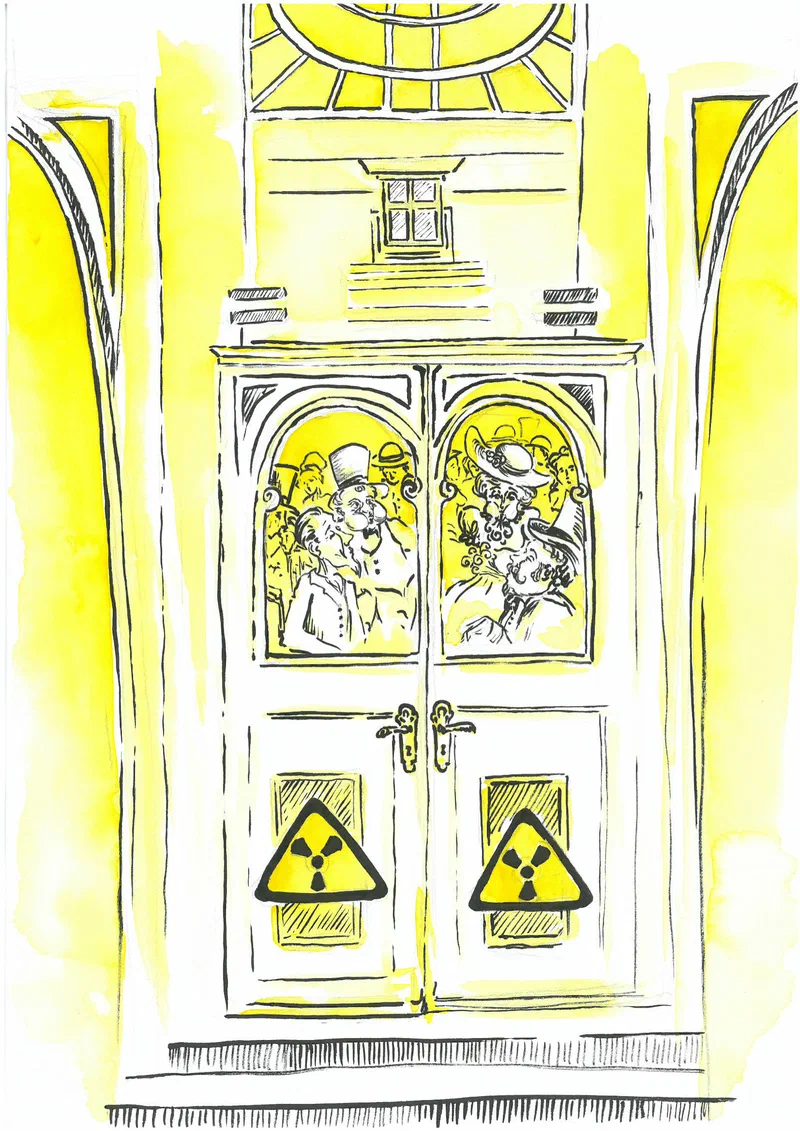
The OLDEST radon spa in the world
Although it is mainly Jáchymov that the world associates with radioactivity, Teplice spa beats it by several years when it comes to offering the inhalation of radon.
On the threshold of the 20th century, radioactivity was a hot topic. It was discovered in 1896 by Henri Becquerel and seven years later Marie Skłodowska Curie won a Nobel Prize for developing the theory of the radioactivity. A mere two years later, Dr. Mache and Dr. Meyer were already touring spas in what are now the Ústí nad Labem (Aussig an der Elbe) and Karlovy Vary (Carlsbad) regions, conducting measurements to ascertain whether or not the waters spouting from the depths of the earth happen to be radioactive too. And in Teplice, the fame of which was slowly fading, there actually was radioactive water!
Then, in 1905, researchers published a technical article in Měsíčník pro chemii (The Monthly Journal for Chemistry). The spa management immediately took advantage of the discovery: it had a small pavilion for the inhalation of vapours from radioactive water, a so-called emanatorium (from the Latin emanare – to flow out), built on the spot where the “Horse Fountain” (Koňská kašna) is situated today. It was a novelty that had not yet been tested elsewhere, and one with which Teplice became one of the world’s top spa towns.
The Teplice spa no longer offers radon inhalation today. Those interested in a radioactive gas have to go to Jáchymov. They still have had an emanatorium there, but as they only welcomed their first guests in 1911, first place is held by Teplice.